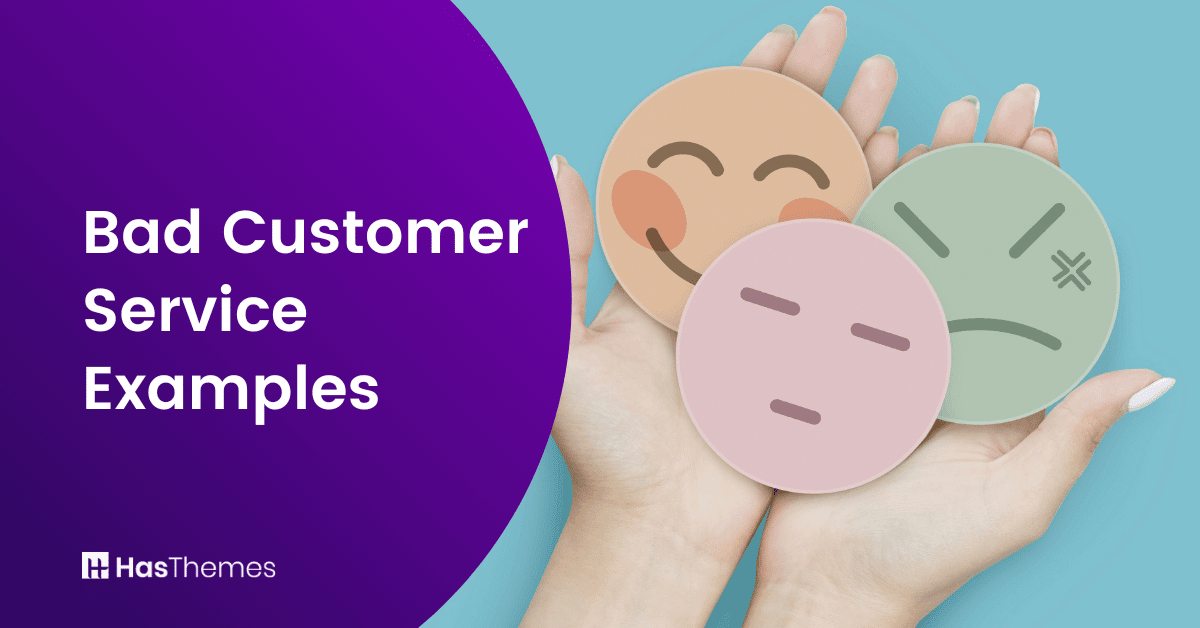
8 Bad Customer Service Examples to Avoid in 2026

Quick Answer:
Bad customer service examples include situations where businesses fail customers through long wait times, rude or untrained agents, ignored social media complaints, rigid refund policies, and over-reliance on bots. These failures lead to customer churn, negative reviews, and lost revenue. Common in retail, call centers, and eCommerce, these issues are preventable with the right tools and training.
Every business knows customer service matters — but few realize just how much a single bad interaction can cost them. Whether you run a small WooCommerce store or a large eCommerce brand, bad customer service examples are hiding in plain sight: an ignored complaint on social media, an agent who can’t process a refund, a chatbot that loops forever without resolving anything.
In 2026, customers will have more choices than ever. They are quick to switch brands, quicker to post about it, and very unlikely to come back after a bad experience. According to Zendesk, more than half of consumers will leave a brand after just one negative service interaction.
This guide breaks down 8 of the most common bad customer service examples, explains why each one happens, shows you the real-world business damage it causes, and most importantly, tells you exactly how to fix it. If you’re serious about retaining customers and growing your business, this is the checklist you need.
Table of Contents
What Is Bad Customer Service?
Bad customer service is when a business fails to meet customer expectations in terms of response time, service quality, empathy, or resolution — leaving the customer feeling ignored, frustrated, or undervalued.
According to Zendesk (2026), the top indicators of poor customer service include:
- Long wait times or unresponsive agents
- Automated systems that block access to real humans
- Repeating information multiple times across departments
- Rude or untrained staff
- Unresolved complaints and no follow-up
Understanding what bad customer service looks like — and why it happens — is the first step to building a brand customers actually trust.
Why Bad Customer Service Is So Costly in 2026
The cost of poor customer service has reached a global crisis level. Businesses worldwide lose an estimated $3.7 trillion annually due to poor customer experiences (Forbes/Qualtrics XM Institute, 2024).
Here are the most important stats you need to know:
- 74% of customers reported having a bad service experience in recent years — an increase vs. prior years
- More than half of consumers say they’ll switch to a competitor after just one bad experience (Zendesk, 2025)
- 73% of consumers will switch after multiple bad experiences (Zendesk, 2026)
- 65% of customers have permanently stopped doing business with a brand due to poor service
- 96% of customers say they’ve stopped engaging with a brand after bad service (Forbes, 2020)
- 56% of customers don’t complain after a bad experience — they just leave silently (Coveo, 2023)
- A dissatisfied customer tells 9–15 people about their experience; about 13% will spread it to 20+ others
The bottom line: every lost customer due to bad service costs you far more than just their business. It creates a ripple effect of lost referrals and damaged brand reputation.
Read More: What Is Customer Support? A Full Definition
8 Common Bad Customer Service Examples to Avoid
1. Pushy or Aggressive Sales-Oriented Agents
What it looks like: Your customer service agent pressures a customer to upgrade, buy an add-on, or purchase something they didn’t ask for — making the customer feel manipulated rather than helped.
Real-world scenario: A customer contacts support to resolve a billing issue. Instead of solving the problem, the agent pivots to upselling a premium plan, ignoring the original concern entirely.
Why it’s harmful: Customers reach out for help, not sales pitches. Pushy agents damage trust and can permanently drive buyers away. This is one of the most common bad customer service examples in retail and eCommerce environments.
How to fix it: Train agents to prioritize resolution first. Only introduce relevant offers after the core issue is resolved — and only when the customer seems open to it.
2. Incompetent or Untrained Support Agents
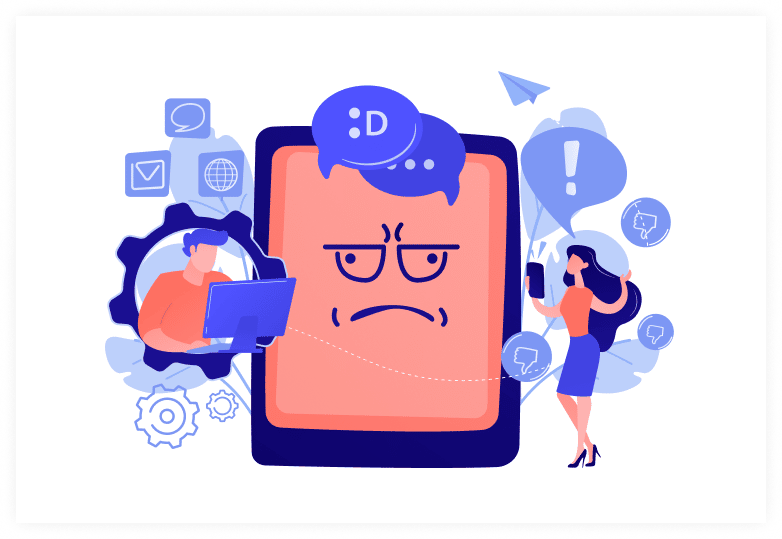
What it looks like: A customer contacts support with a straightforward issue, only to receive incorrect information, vague answers, or no resolution at all.
Real-world scenario: A customer emails about a missing order. The agent responds with a generic template that doesn’t address the specific concern, forcing the customer to follow up multiple times.
Why it’s harmful: Customers lose confidence in your brand. According to the National Customer Rage Survey (2025), 77% of Americans had a product or service problem in the last 12 months — untrained agents make every one of those problems worse.
How to fix it: Implement a structured onboarding and training program. Use a support ticket system (like Support Genix) to give agents full conversation history so they never start a response blind.
Related: Best WordPress Helpdesk Plugins to Streamline Customer Support
3. Long Wait Times and Unresponsive Agents
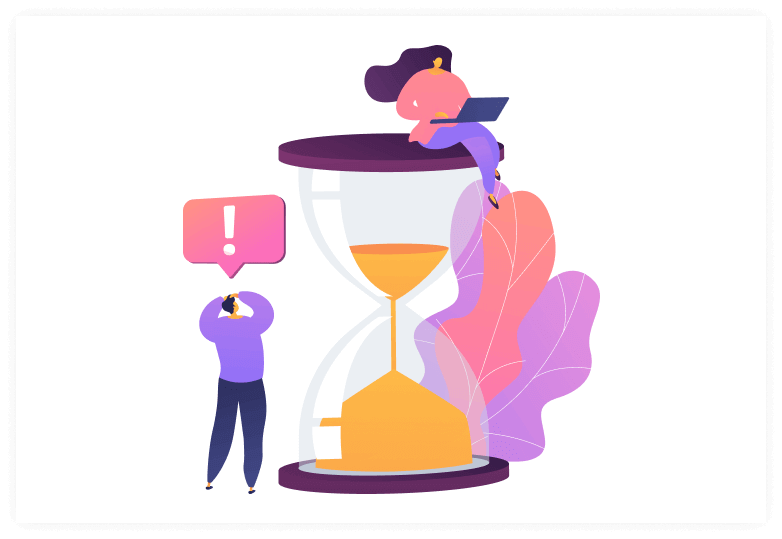
What it looks like: Customers are left on hold for extended periods, receive no response to emails for 24+ hours, or can’t reach a live agent at all.
Real-world scenario: According to Giva (2025), over 60% of customers will hang up if they’re on hold for more than two minutes. Many phone-based support experiences still exceed six minutes.
The statistics are damning:
- 33% of customers say their #1 frustration is waiting on hold
- Another 33% say their top frustration is repeating themselves to multiple reps (HubSpot, 2021)
- 55% of consumers say they will stop doing business with a company if wait times become too long on any channel
How to fix it: Offer multi-channel support (live chat, email, phone) and set clear response SLAs. Live chat software can dramatically reduce wait frustration — customers report that real-time chat increases loyalty and can even increase average order value by 10% (Forrester via Tidio, 2025).
Related: How Live Chat Software Can Skyrocket Your eCommerce Sales
4. Over-Reliance on Automated Responses and Poor Protocols

What it looks like: Customers receive canned, robotic replies that don’t address their actual question. Automated phone trees make it nearly impossible to reach a real person.
Real-world scenario: A customer calls to dispute a charge. After navigating a complex automated menu for 10 minutes, they’re told to “visit the website” — the same website that directed them to call.
The data: 62% of customers say they’d “rather hand out parking tickets” than deal with an automated phone tree or have to repeat themselves to multiple reps (HubSpot via HelpScout, 2025). While 74% of companies now use chatbots, only 29% have adopted more sophisticated conversational AI that can actually handle nuanced queries (AIRPM, 2024).
How to fix it: Use automation for speed, not as a replacement for humans. Always provide a clear, easy route to a live agent. For WordPress businesses, consider tools like Support Genix that combine automation with ticketing for a seamless hybrid experience.
5. Inability to Process Refunds or Inflexible Policies
What it looks like: A customer requests a refund for a defective product or unsatisfactory service, but the agent refuses citing rigid policy even when the refund is clearly warranted.
Real-world scenario: A shopper returns a product within the stated policy window, but the agent insists the system won’t allow the refund without manager approval, then the manager is “unavailable.”
Why it’s harmful: According to Zendesk (2025), 64% of customers will spend more with a business that resolves their issue on the channel they’re using. Inflexibility sends exactly the opposite message.
How to fix it: Empower frontline agents to process standard refunds without requiring multi-level approval. Make your return and refund policy visible, simple, and actually honored. For eCommerce stores, a clean refund flow is a fundamental WooCommerce best practice.
6. Making Customers Repeat Themselves Across Departments
What it looks like: A customer explains their issue to Agent 1, gets transferred to Agent 2, then Agent 3 — having to repeat the full story every single time with zero continuity.
Real-world scenario: A customer contacts an internet service provider about an outage. They explain their account details and issue to three different agents over 45 minutes, with each agent acting as if the previous conversation never happened.
The statistics:
- 68% of customers get irritated when their call is transferred between departments (Zendesk, 2024)
- 33% say repeating themselves is their single biggest customer service frustration
- It takes 12 positive experiences to make up for 1 negative one (Ruby Newell-Legner, 2015)
How to fix it: Implement a CRM or unified support platform so every agent can see the full customer history before picking up. An email ticketing system or helpdesk tool ensures context is never lost between handoffs.
Related: 8 Zendesk Alternatives For Customer Support Management
7. Ignoring Customer Complaints on Social Media
What it looks like: A customer posts a complaint on Twitter/X, Instagram, or Facebook and receives zero response or worse, a dismissive, templated reply that doesn’t address their concern.
Real-world scenario: United Airlines faced a catastrophic brand crisis in 2017 when a video of a passenger being forcibly removed from an overbooked flight went viral. The company’s initial, tone-deaf response amplified public outrage and caused a significant drop in stock value and brand trust, a textbook example of bad customer service on social media.
Why it matters in 2026:
- 80% of consumers use social media to engage with brands for support, complaints, or feedback (ElectroIQ, 2025)
- 21% of customers have shared a poor support experience on social media (Nextiva, 2025)
- 3 in 4 consumers say a bad customer service interaction can ruin their entire day (Zendesk, 2025)
- Social media posts spread negative experiences to hundreds or thousands before a business can respond
How to fix it: Monitor social channels with a dedicated social listening tool. Respond to all complaints publicly (and with empathy), then move the detailed resolution to DM. Never delete legitimate complaints — this makes things worse.
Related: Top Customer Support Best Practices for eCommerce Success
8. Difficult or Inaccessible Customer Support Channels
What it looks like: The only way to contact customer support is buried 5 clicks deep on the website, or a phone number that leads to a voicemail box nobody checks, or a live chat that’s “offline” 80% of the day.
Real-world scenario: A customer needs urgent help with a checkout error on your WooCommerce store. They search your website for 10 minutes, find no live chat, discover the email response time is “3–5 business days,” and abandon their cart and your brand for good.
The data:
- 61% of customers prefer messaging apps or live chat when contacting brands (2026)
- 50% of older customers still prefer phone support
- Customers now use an average of 9 different channels when interacting with a single company
- 54% of consumers say fast responses are essential when choosing a brand
How to fix it: Offer multiple, clearly accessible support channels, live chat, email, phone, and social. For Shopify store owners, live chat apps can be integrated quickly to dramatically improve accessibility. For WooCommerce stores, Support Genix provides unlimited tickets, agents, and mailboxes in one plugin.
The Real-World Cost: What Happens When You Ignore These Examples
| Bad Customer Service Issue | Business Impact |
|---|---|
| Long wait times | 55% of customers switch providers |
| Rude/untrained agents | Trust destroyed; 12 good experiences needed to recover |
| No refund policy | Lost sale + negative review + churn |
| Social media complaints ignored | Viral backlash, brand reputation damage |
| Forced to repeat information | 68% of customers get irritated and often disengage |
| Inaccessible support | Cart abandonment, lost revenue |
| Automated-only service | 62% of customers deeply frustrated |
| Pushy agents | Customer dissatisfaction, lost future business |
How to Measure and Improve Your Customer Service

Key Metrics to Track
1. Resolution Rate:
Calculate: (Total inquiries – Unresolved cases) ÷ Total inquiries × 100
The higher this number, the better your team is performing.
2. First Contact Resolution (FCR): What % of issues are resolved in the very first interaction? Higher FCR = less frustration and lower cost.
3. Average Response Time: Benchmark: Live chat under 2 minutes, email under 60 minutes (Superhuman, 2025), social media under 24 hours.
4. Customer Satisfaction Score (CSAT): Post-interaction surveys with a simple 1–5 or thumbs up/thumbs down rating.
5. Net Promoter Score (NPS): Measures whether customers would recommend your business, a powerful long-term loyalty indicator.
Tools to Improve Customer Service
For WordPress and WooCommerce store owners, here are recommended solutions:
- Support Genix – WordPress support ticket plugin with unlimited tickets, agents, and mailboxes. Ideal for managing customer queries at scale.
- Live Chat Software – Add real-time support directly on your eCommerce site to eliminate wait frustration.
- Email Ticketing Systems – Organize, prioritize, and track all customer emails with unique ticket IDs.
- WordPress Helpdesk Plugins – Streamline your full support workflow with specialized helpdesk tools.
- Zendesk Alternatives – More affordable, flexible customer support management tools.
What are the benefits of providing good customer service to your customers?
There are huge benefits for your business or organization from providing excellent customer service. Customer satisfaction is one of the main reasons behind a happy and loyal customer. The customer most likely to promote your business online or through word-of-mouth is the one who is most satisfied with your product or service. This customer has likely had a positive experience with your brand and is willing to recommend it to others.
Satisfied customers are less likely to leave negative comments or reviews and are less likely to complain about your products or services. Customers provided with good customer service are loyal and make repeat purchases, as they are likely to choose the same business the next time they need the same product or service.
This will increase your brand loyalty and will benefit your business. That is why some businesses encourage repeat purchases, perhaps through a loyalty scheme, where there is a reward for customers who purchase regularly.
Good customer service provides many benefits for businesses, so it is important to ensure that your customers are always satisfied.
Good Customer Service vs. Bad Customer Service: Key Differences
| Factor | Bad Customer Service | Good Customer Service |
|---|---|---|
| Response Time | Hours or days; long hold times | Under 2 min (chat), under 60 min (email) |
| Agent Knowledge | Vague, incorrect, or unhelpful answers | Accurate, confident, empathetic responses |
| Channel Availability | Hard to find, limited hours | Multi-channel, 24/7 where possible |
| Refund/Flexibility | Rigid policies, no exceptions | Empowered agents, fair resolution |
| Personalization | Generic scripts, no context | Full history access, personalized service |
| Social Media | Ignored or deleted complaints | Prompt, empathetic public responses |
| Automation | Blocks access to humans | Supplements humans, easy escalation path |
| Outcome | Customer leaves frustrated | Customer leaves satisfied, loyal |
Frequently Asked Questions About Bad Customer Service
What are the most common examples of bad customer service?
The most common bad customer service examples include long wait times, rude or untrained agents, a lack of refund options, forcing customers to repeat information, ignoring social media complaints, over-reliance on automated responses, and inaccessible support channels.
How does bad customer service affect a business?
Bad customer service leads to customer churn, negative reviews, social media backlash, reduced revenue, and long-term brand damage. Globally, businesses lose approximately $3.7 trillion annually due to poor customer experiences (Forbes/Qualtrics XM Institute, 2024).
What is considered bad customer service in retail?
In retail, bad customer service examples include pushy salespeople, unhelpful returns processes, long checkout queues with no assistance, staff who ignore customers, and failure to resolve complaints promptly.
How can you fix bad customer service?
Fix bad customer service by investing in staff training, implementing a ticketing or helpdesk system, offering multiple support channels, empowering agents to resolve issues without excessive escalation, and actively monitoring and responding to customer feedback across all platforms.
What’s the difference between bad customer service and poor customer experience?
Bad customer service refers specifically to failures during support interactions (agent behavior, response time, resolution quality). Poor customer experience is broader — it encompasses the entire customer journey, including product quality, website UX, checkout flow, and post-purchase communication.
What are examples of bad customer service on social media?
Common examples include ignoring public complaints, deleting negative comments, replying with generic scripted responses, taking days to respond, or becoming defensive/argumentative with upset customers online.
Final Thoughts
Bad customer service doesn’t just happen — it’s a symptom of deeper issues: undertrained staff, inaccessible support infrastructure, rigid policies, and a company culture that treats support as a cost center rather than a growth driver.
The good news? Every example in this list is fixable. With the right tools, training, and mindset, businesses of all sizes can transform their customer service from a liability into a genuine competitive advantage.
For WordPress and WooCommerce store owners, start by making support accessible, responsive, and human-centered. Tools like Support Genix, live chat integrations, and a clear multi-channel strategy are the building blocks of great customer service in 2026.
Explore more: