Best eCommerce HTML Templates for Online Stores in 2026

Quick Answer: The best eCommerce HTML templates in 2026 include Nevixra for electronics, Lezada for large multipurpose catalogs, Helendo for furniture stores, and Flone for fashion-focused storefronts. These templates provide ready-made HTML/CSS/JavaScript storefront designs, but they still require backend integration for payments, inventory, and order management.
An eCommerce HTML template is a package of downloadable HTML, CSS, and JavaScript files that provides the front-end design for an online store.
These templates cover storefront layout, product pages, shop/catalog pages, cart and checkout interfaces, and supporting pages like blogs and contact forms.
They do not, by themselves, provide payment processing, inventory management, or order operations; those require backend integration (see the section below on what HTML templates can and cannot do).
This guide covers seven Bootstrap 5 eCommerce HTML templates that are currently available on ThemeForest. Each has been evaluated on its store-specific layouts, framework version, page depth, and real-world limitations.
Prices shown are at the time of review — verify current pricing on the product listing before purchasing, as marketplace prices change.
If your project is an IT company, SaaS product, hosting business, or software platform rather than a product storefront, see our guide to HTML technology website templates instead.
Table of Contents
How We Evaluated These Storefront Templates
Every template in this list was verified live on ThemeForest before inclusion. Evaluation criteria:
- Store relevance: Does the template exist primarily for product-selling storefronts?
- Shop and catalog layouts: How many shop page variations are included? What filtering or navigation UI is provided?
- Product page design: Does it include multiple product detail layout options?
- Cart and checkout interfaces: Are front-end cart and checkout pages included?
- Framework version: Bootstrap 5.x is preferred; older versions are noted.
- Responsiveness: Does it adapt across mobile, tablet, and desktop?
- Documentation: Is documentation included?
- Maintenance: When was the last update? Is the product still actively maintained?
- Price relative to page count and feature depth.
Templates primarily designed for IT, SaaS, hosting, or non-retail business types are excluded from this list.
Compare the Top eCommerce HTML Templates at a Glance
Prices verified at time of review. Confirm current pricing before purchasing.Template Best For Framework Shop Layouts Product Layouts Homepages Price Lezada Large multipurpose catalogs Bootstrap 5.2.1 7 8 102 variations $17 Flone Fashion, cosmetics, multi-niche Bootstrap 5.0.2 17+ Multiple 33+ $17 Mr.Bara Multipurpose with broad niche demos Bootstrap 5.2.3 6+ 11+ 27+ $12 Helendo Furniture and interior stores Bootstrap 5.3.7 10 Multiple 11+ $17 Skudmart Fashion and luxury apparel Bootstrap 5.2.3 Multiple Multiple 15 $17 Airi Fashion, home décor, accessories Bootstrap 5 5+ 8 20 $11 Koparion Book stores and digital publications Bootstrap 5.2.1 Grid + List Multiple 6 $17
What Is an eCommerce HTML Template?
An eCommerce HTML template is a front-end design package, typically a collection of HTML files, CSS stylesheets, JavaScript components, and supporting assets, built around the visual requirements of an online store.
These templates give you a complete storefront interface: homepage, product catalog, product detail pages, cart page, checkout page, and supporting content pages. They are typically built on CSS frameworks like Bootstrap 5 and use component libraries for sliders, mega menus, and product grids.
They are not a complete eCommerce system by themselves. A developer needs to connect the front-end files to a backend, a CMS, a headless commerce API, or a custom application before the store can process real transactions. This distinction matters when evaluating which template to buy.
What an eCommerce HTML Template Can and Cannot Do
This is the most important section to read before purchasing.
What it provides:
- Responsive storefront layouts for desktop, tablet, and mobile
- Product grid and list pages (catalog/shop pages)
- Product detail page designs with gallery, variations UI, and related products
- Cart and checkout interface layouts (front-end design only)
- Navigation structures including mega menus
- Blog and content page layouts
- Search and filter UI components
- Reusable HTML/CSS/JavaScript components
- Clean, customizable code
What it does not provide by itself:
- Live product database or inventory engine
- Payment gateway processing (Stripe, PayPal, etc.)
- Real-time stock management
- Secure order processing
- Customer account management with purchase history
- Shipping rate calculation
- Tax calculation and compliance
- Sales analytics dashboards
- Email marketing or automation
To turn an HTML template into a functioning store, developers typically connect it to a backend system such as a headless commerce API, a WooCommerce or custom REST backend, or a platform like Laravel.
If you need a ready-to-operate store without custom development, consider a WooCommerce theme or a hosted platform like Shopify instead.
Examples of the Best eCommerce HTML Templates
Here are some responsive eCommerce HTML templates that fulfill the best criteria of an eCommerce website
1. Lezada – Multipurpose eCommerce HTML Template with multi-vendor
Best for: Multipurpose stores with large catalogs — fashion, cosmetics, accessories, furniture, digital products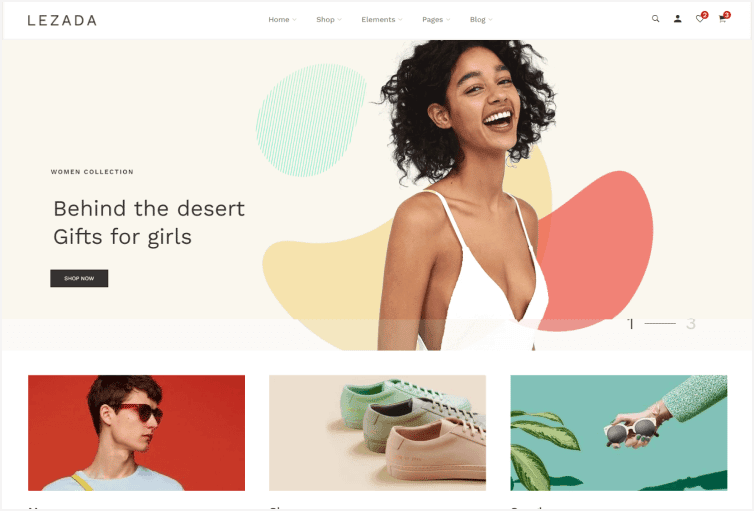
Lezada is the most feature-rich template in this list by sheer page count and layout variety. With 102 homepage variations, 7 shop page layouts, and 8 product detail variations built on Bootstrap 5.2.1, it gives developers an extensive library of pre-built storefront components to work from.
The template handles a wide range of product categories. Homepage variations cover fashion, cosmetics, furniture, sporting goods, children’s products, and accessories, making it genuinely multipurpose rather than cosmetically so.
The shop pages include grid and list views with product filtering UI. Product pages include multiple gallery layouts, related product sections, and a tabbed product information structure.
It includes a Mailchimp subscribe form and an Ajax-working contact form. Code is W3C validated, and the template includes SCSS source files for structured customization.
Key Features:
- 102 homepage variations across dozens of product categories
- 7 shop page layouts including grid and list views
- 8 product detail page variations
- Bootstrap 5.2.1 with SCSS source files
- 1,700+ icon font library (FontAwesome, Themify, Ionicons)
- Mailchimp subscribe form and Ajax contact form
- W3C validated, cross-browser compatible
- Well documented
Pros:
- Best page-count-to-price ratio in this list
- Covers the broadest range of product niches
- Strong product and shop layout variety for developer flexibility
Limitation: No active update history since that date.
Price: $17
2. Flone – Clean, Minimal eCommerce HTML Template
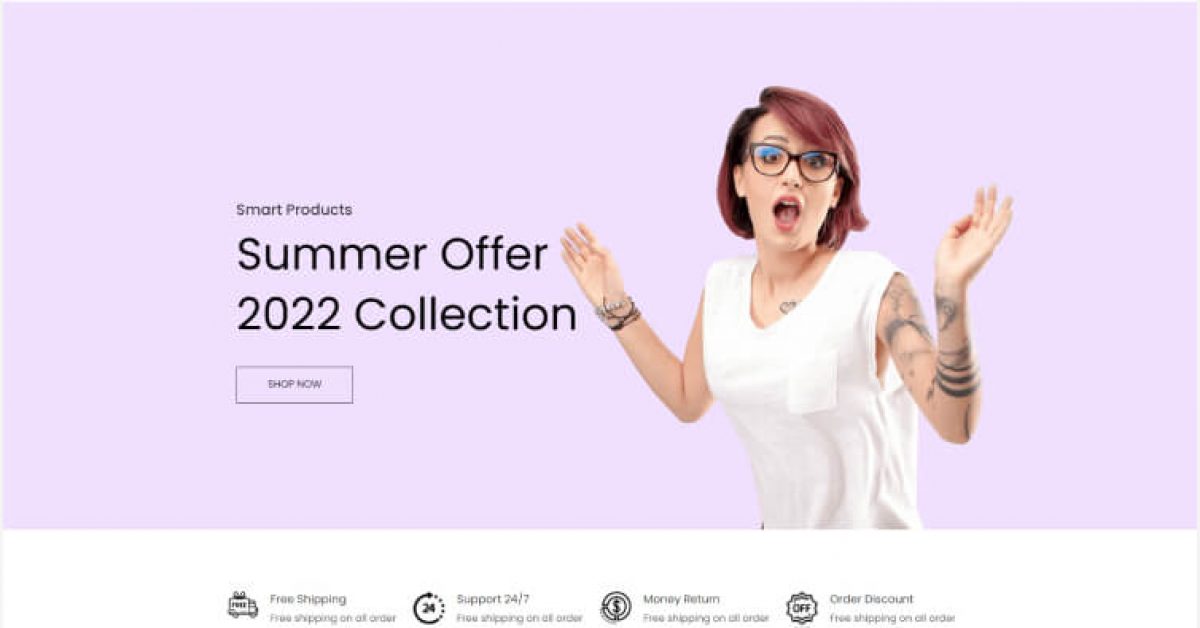
Best for: Fashion (men, women, kids), cosmetics, electronics, furniture, multi-vendor storefronts
Flone is one of the largest HTML eCommerce templates by raw page count: 64+ total pages with 33+ homepages and 17+ shop pages — built on Bootstrap 5.0.2. It covers a broad set of product categories including fashion, cosmetics, electronics, gadgets, and furniture, which makes it suitable for general-purpose eCommerce front-end work.
The 17+ shop page variations are the standout number here. Developers building stores with complex catalog structures, multiple category views, filtered lists, and grid variations will find Flone gives them more shop layout options than most competing templates. Blog pages are also included for content-driven storefronts.
Flone uses Owl Carousel for product sliders, includes Font Awesome icons, Google Fonts, and a dynamic contact form. HTML and CSS are well-commented. The template is cross-browser compatible and includes a Shopify version and a React JS version if the project later requires a framework upgrade.
Key Features:
- 64+ total pages, 33+ homepages, 17+ shop pages, 6+ blog pages
- Bootstrap 5.0.2 with SCSS support
- Owl Carousel slider
- Font Awesome icons, Google Fonts
- Dynamic contact form
- W3C validated HTML5 and CSS3
- Well-commented code, well documented
- Cross-browser compatible
Pros:
- Highest shop page count in this list (17+)
- Covers the widest variety of product categories out of the box
- React JS and Shopify versions available if project scope grows
Limitation: No maintenance activity since that date.
Price: $17
3. Mr.Bara – Multipurpose Bootstrap eCommerce HTML Template
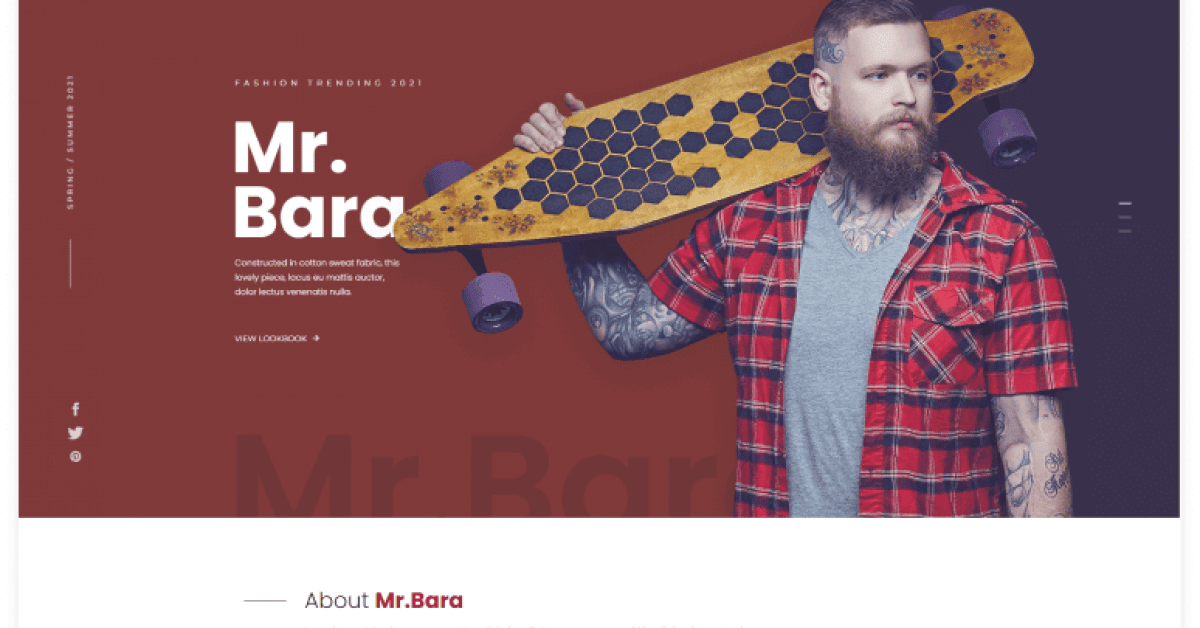
Best for: Fashion, shoes, cosmetics, bags, jewelry, sports, watches, and multipurpose stores requiring flexible header/footer configurations
Mr.Bara offers 71+ HTML pages with 27+ homepage demos and a strong set of inner page layouts, 6+ shop layouts, 11+ product layouts, and 7 blog layouts. Built on Bootstrap 5.2.3, it is the most current Bootstrap release among the non-Helendo templates on this list.
The 11+ product page layouts are particularly notable. Few HTML eCommerce templates offer this many product detail variations, which gives front-end developers the flexibility to present different product types clothing with size/color variants, single-image products, video-forward product pages- without building custom page structures from scratch.
The template also includes 7+ header styles and 4+ footer styles, giving significant layout control without requiring custom development. A swiper slider is used in place of Owl Carousel, which performs well on mobile. Code is W3C validated with SCSS source files included.
Key Features:
- 71+ total pages, 27+ homepages, 11+ product layouts, 6+ shop layouts
- Bootstrap 5.2.3 with SCSS source files
- 7+ header styles, 4+ footer styles
- Swiper slider, Font Awesome and Ionicons
- W3C validated, no console errors
- Cross-browser compatible
- Free updates
Pros:
- Most product page layout variations of any template in this list (11+)
- Bootstrap 5.2.3 — most current release outside of Helendo
- Strong header/footer configuration options
Price: $12
4. Helendo – Furniture eCommerce HTML Template
Best for: Furniture retailers, interior design accessory stores, home décor, lifestyle stores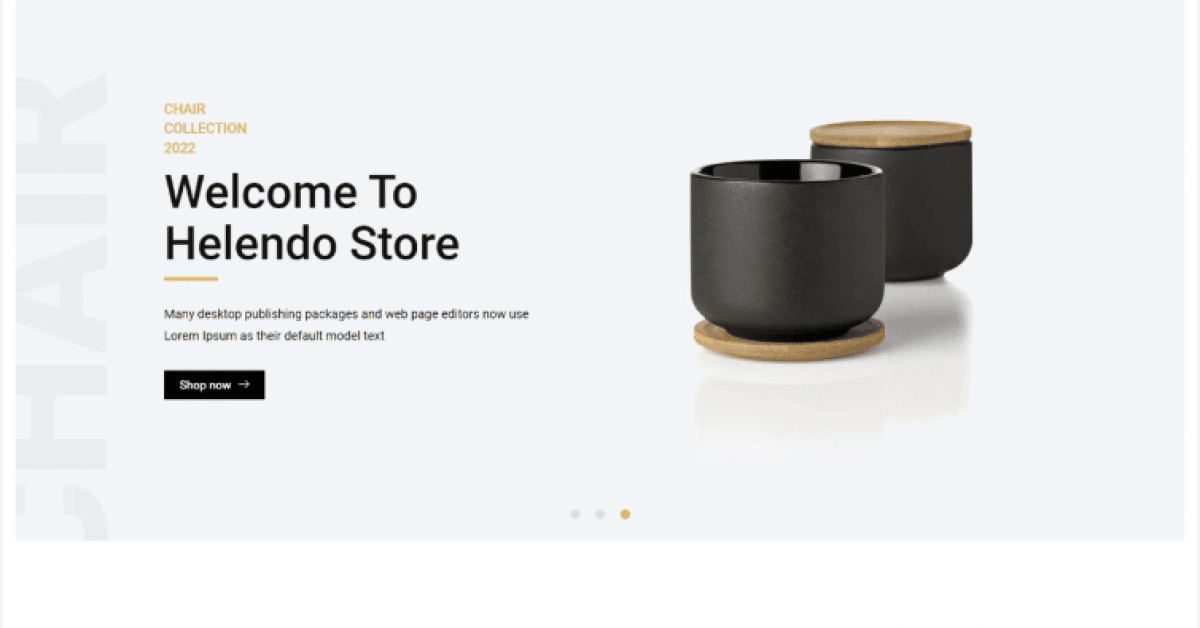
Helendo is built specifically around furniture and interior product selling. It includes 11+ homepage layouts, 10 shop page layouts, and multiple product detail page variations — a focused page depth rather than the broad multi-niche approach of Lezada or Flone. Homepage designs emphasize large product photography, minimal typography, and the kind of breathing room that furniture and décor products need to display well.
Product pages include horizontal thumbnail variants and a my-account page, which is uncommon at this price point in pure HTML templates. The CSS animation is smooth and unobtrusive — relevant for luxury positioning. SCSS source files are included, the markup is W3C validated, and a working contact form is built in.
The one consideration: with only 11+ homepages versus Lezada’s 102 variations, developers building a general-purpose multipurpose store will find Helendo limiting. It is the right choice when the store’s identity is specifically furniture, décor, or lifestyle products.
Key Features:
- 11+ homepage layouts, 10 shop page layouts
- Bootstrap 5.3.7 (most current in this list — updated August 2025)
- SCSS source files, Font Awesome icons
- Smooth CSS3 animations
- W3C validated markup, clean code
- Working contact form
- My account page and FAQ page included
- Well documented, dedicated support
Pros:
- Only actively maintained template in this list (updated August 2025)
- Bootstrap 5.3.7 — the most current framework version here
- Focused furniture/interior niche design with 10 dedicated shop layouts
Limitation: Smaller page count compared to multipurpose templates.
Price: $17
Skudmart – Fashion Luxury Shopping Website Template using Bootstrap 5
Best for: Fashion boutiques, clothing stores, luxury apparel, shoes, accessories, sports, and bag stores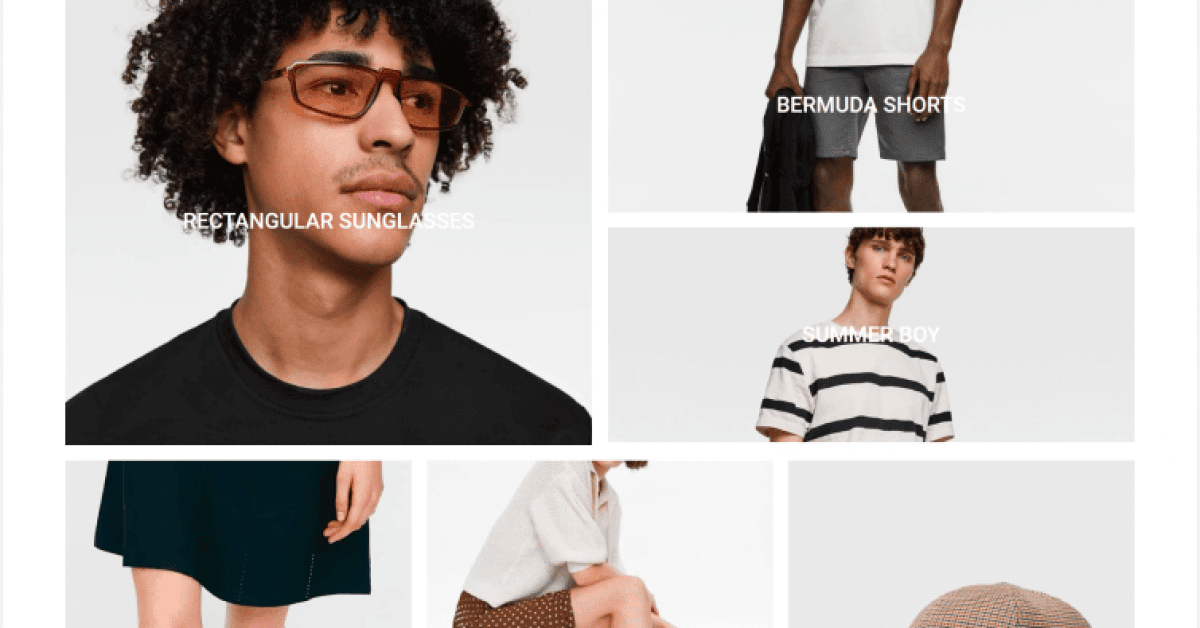
Skudmart is a minimal, refined Bootstrap 5.2.3 fashion template with 65+ pages and 15 homepage designs. It focuses on clean typography, generous whitespace, and product imagery, the visual language that fashion and luxury retail requires.
The homepage includes a mega menu that supports complex navigation, useful for stores with multiple clothing categories (menswear, womenswear, seasonal collections). The 65+ page count covers shop pages, product detail pages, blog pages, about pages, contact, and a coming soon page.
Skudmart uses a Swiper slider rather than Owl Carousel; SCSS is supported, and the markup is W3C validated. Google Fonts and a dynamic contact form are included.
Key Features:
- 65+ total HTML pages, 15 homepage designs
- Bootstrap 5.2.3 with Sass support
- Swiper slider, mega menu
- Google Fonts, W3C validated markup
- Dynamic contact form
- Cross-browser compatible
- Well documented
Pros:
- Clean minimal design purpose-built for fashion and luxury retail
- Mega menu supports complex navigation for multi-category clothing stores
- Bootstrap 5.2.3 – current 5.x release
Limitation: Limited community troubleshooting resources as a result.
Price: $17
6. Airi – Minimal eCommerce HTML Template
Best for: Fashion, kids’ clothing, home décor, accessories, shoes, travel products, winter fashion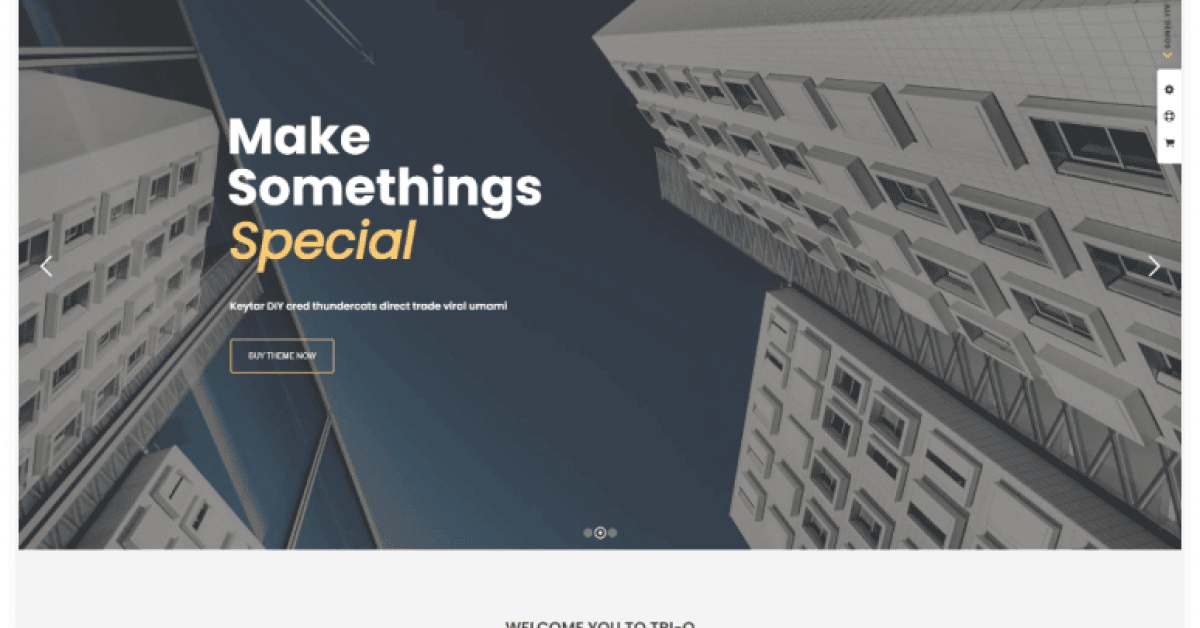
Airi is a well-rounded Bootstrap 5 eCommerce template with 50+ pages, 20 homepage designs, and a broad product category focus. With 5+ shop layouts and 8 product detail page variations, it provides enough inner page flexibility for stores that sell across multiple categories.
The template includes 7+ header layout options and supports both grid and list shop views. A quick view product feature is included, reducing the need for custom development on catalog pages. Mega menu, Google Maps, and a contact form are built in. SCSS source files are included alongside W3C validated markup.
Airi has the highest rating among templates in this list with seven 5-star reviews on ThemeForest, and 359 sales — indicating a reasonably active purchase history with positive buyer feedback.
Key Features:
- 50+ total pages, 20 unique homepage designs
- Bootstrap 5, SCSS, HTML5, and CSS3
- 5+ shop layouts (grid and list), 8 product detail variations
- 7+ header layout options
- Quick view product feature
- Mega menu, Google Maps, contact form
- Pixel perfect, cross-browser, fully responsive
- Well documented
Pros:
- Highest buyer rating (5.0 from 7 reviews) and strongest sales history in this list
- Quick view product feature included
- Broad product category coverage with strong page depth
Limitation: Dependency versions should be checked before use in a current project.
Price: $11 (sale price at time of review; regular $17)
7. Koparion – Books Store HTML5 Website Template
Best for: Book stores, eBook platforms, audiobook stores, library collections, digital publications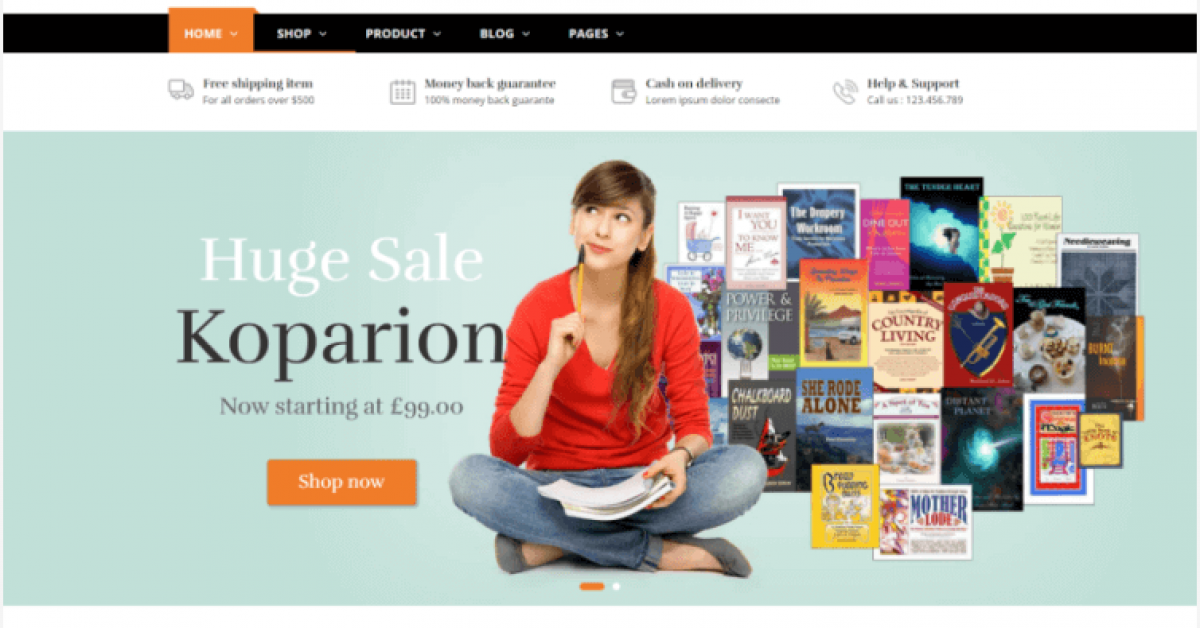
Koparion is the only niche-specific template in this list, designed around book selling and digital publications. Its 18+ pages include 6 homepage variations, shop grid and list views, 2 blog page layouts, and category navigation tuned for books (genres, bestsellers, recent releases, newsletter).
The template includes an Owl Carousel slider, W3C validated markup, a dynamic contact form, and cross-browser compatibility. It is built on Bootstrap 5.2.1. The page depth is intentionally limited — this is a focused product, not a multipurpose kit — but within that focus, the store pages are well structured for the book-selling use case.
Key Features:
- 18+ HTML pages, 6 homepage variations
- Bootstrap 5.2.1, HTML5, CSS3
- Shop grid view and shop list view
- Owl Carousel slider
- Dynamic contact form
- W3C validated markup, cross-browser compatible
- Well documented
Pros:
- Only bookstore-specific template in this list — strong niche fit for that use case
- 301 sales — healthy validation for a niche template
- Shopify version available for platform transitions
Limitation: Narrowly scoped to books and digital publications.
Price: $17
8. Nevixra – Electronics Store eCommerce HTML Template
Best for: Electronics stores, computer shops, mobile phone retailers, gaming accessories, smart devices, and technology marketplaces.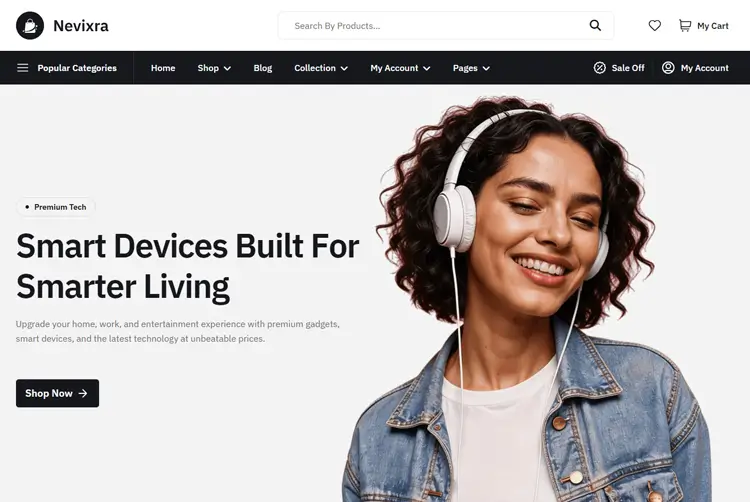
Nevixra is a newly released eCommerce HTML template built specifically for electronics and technology-focused stores. Its layouts are designed around products such as smartphones, laptops, gaming accessories, smart-home devices, cameras, headphones, and other consumer electronics, making it more niche-focused than the multipurpose templates in this list.
The template includes the main storefront pages a developer would expect, including shop and product detail pages, wishlist, cart, checkout, customer account, order details, blog, FAQ, contact, and authentication pages. This gives developers a relatively complete front-end page set for building an electronics-focused storefront without creating the core layouts from scratch.
Nevixra is built on Bootstrap 5.x and includes HTML, CSS, JavaScript, and PHP files. It is responsive, documented, and designed for modern browsers.
Key Features:
- Bootstrap 5.x framework
- Dedicated electronics and technology storefront design
- Shop and product detail pages
- Wishlist, cart, and checkout layouts
- Customer account, orders, and downloads pages
- Blog, FAQ, testimonials, and contact pages
- Responsive and Retina-ready design
- AJAX form integration
- Font Awesome icons and Google Fonts
- Cross-browser compatibility
- Well documented
Pros:
- Most recently updated template in this list
- Strong niche fit for electronics, computers, gadgets, and technology products
- Includes a broad set of customer-account and checkout-related front-end pages
Limitation: Nevixra is very new, with only one ThemeForest sale at the time of review.
Price:$17
Commerce HTML Template vs eCommerce Platform: What’s the Difference?
| HTML Template | eCommerce Platform | |
|---|---|---|
| What it is | Downloadable front-end design package | Complete or extensible commerce system |
| What you get | HTML, CSS, JavaScript source files | Store administration, checkout, orders |
| Backend | Requires separate development | Built-in or closely integrated |
| Control | Full code-level control | Varies; often abstracted |
| Best for | Custom or headless commerce builds | Operational stores with less dev overhead |
| Examples | The templates in this list | WooCommerce, Shopify, BigCommerce |
An HTML eCommerce template is the right starting point when you are building a custom storefront, integrating with a headless commerce backend, or need full control over front-end code. It is not the right starting point if you need a store running in days with minimal development.
For that use case, a WooCommerce theme or a managed Shopify theme is a more practical option.
How to Choose the Right eCommerce HTML Template
1. Match the template to your product catalog
Not all templates are equally suited to every product type. Furniture stores need large product photography, room-set imagery, and dimension tables. Fashion stores need grid-heavy catalogs with color/size filter UI and model photography. Book stores need genre navigation and list-view browsing.
- For furniture and interior products → Helendo
- For fashion, apparel, and multi-category stores → Flone, Skudmart, Airi
- For large general catalogs → Lezada, Mr.Bara
- For book and digital publications → Koparion
For more store type guidance, see our overview of eCommerce design templates.
2. Inspect the shop and product page layouts
The number of shop layouts matters when you need to display products in different ways — filtered grids, list views, featured collections. The number of product page layouts matters when different products have different information hierarchies (e.g., single-image products vs. products with multiple angles and specification tables).
Before purchasing, check the live preview specifically on the shop page and product detail page, not just the homepage.
3. Check whether cart and checkout interface pages are included
Most Bootstrap eCommerce templates include cart and checkout page designs. Verify this in the live preview. These are front-end layouts only — they do not process real transactions without backend integration.
4. Evaluate the Bootstrap version and dependency age
All templates in this list use Bootstrap 5.x. However, Bootstrap 5.0.2 (Flone), 5.1.x (some others), and 5.3.7 (Helendo) represent different points in the Bootstrap 5 release cycle. For projects with a multi-year lifespan, a more recently updated template reduces the maintenance burden of keeping dependencies current.
5. Assess mobile shopping UX specifically
Look at the mobile preview in each template’s live demo. Check: does the mega menu collapse useably on mobile? Are product images full-width and fast-loading? Is the cart accessible without navigating away from the catalog? Is the checkout form readable on a small screen?
6. Check documentation and your team’s technical capacity
HTML templates require a developer to set them up and integrate them with a backend. Well-documented templates reduce onboarding time. All templates in this list are marked “Well Documented” on ThemeForest, but documentation depth varies. Check the comment sections on each ThemeForest listing for user reports on setup difficulty.
For teams building on WordPress and WooCommerce specifically, explore whether a WooCommerce page builder or purpose-built WooCommerce theme would serve the project better than starting from a raw HTML template.
Are Bootstrap eCommerce Templates Worth Using in 2026?
Bootstrap 5 eCommerce templates remain a practical starting point for custom front-end builds, particularly for developers working on headless commerce projects, custom backend integrations, or bespoke storefront designs.
The key trade-off: you get full code ownership and design control, but you take on the integration work. A Bootstrap eCommerce template is a productivity tool for developers, not a launch-ready store for non-technical store owners.
For teams evaluating whether to start from an HTML template or a managed platform, see our comparison of Bootstrap eCommerce templates and our guide to HTML and CSS eCommerce templates for additional options.
Watch the Video about Best eCommerce HTML Templates | Multipurpose eCommerce HTML Templates
Frequently Asked Questions
Can an HTML template run a complete online store?
Not by itself. An eCommerce HTML template mainly provides the storefront interface. Real payment processing, inventory, orders, customer accounts, shipping, and taxes require a backend or commerce platform. Developers can connect the template to a custom backend, headless commerce system, or platforms such as WooCommerce.
What is the difference between an eCommerce HTML template and a WooCommerce theme?
An HTML template is a standalone front-end code package that requires backend integration. A WooCommerce theme works inside WordPress and styles a store powered by the WooCommerce plugin, which provides products, carts, checkout, orders, and related commerce functionality. See our guide to the best WooCommerce themes.
Can I connect an HTML eCommerce template to a backend?
Yes. Developers can connect an HTML storefront to custom APIs, headless commerce systems, WooCommerce-based backends, or frameworks such as Laravel. The HTML template handles the interface, while the backend manages products, customer data, orders, payments, and other store operations. See our Laravel eCommerce templates guide for Laravel-based projects.
What should I look for in an eCommerce HTML template?
Check the quality of shop and product layouts, cart and checkout interfaces, mobile responsiveness, framework version, SCSS availability, documentation, and update history. A more recently maintained template may require less dependency updating, but you should still review its Bootstrap version, JavaScript libraries, and other dependencies before development.
Are Bootstrap eCommerce HTML templates mobile responsive?
Bootstrap 5 uses a mobile-first, responsive grid system, so templates built correctly with it can adapt across different screen sizes. However, responsiveness does not guarantee good mobile shopping UX. Test the live demo’s menu, product gallery, filters, cart, and checkout layouts on mobile before buying.
Can I use an HTML template for a custom or headless eCommerce website?
Yes. An HTML template can serve as a starting point for a custom or headless storefront connected to a commerce backend through APIs. Developers may use the original HTML/CSS/JavaScript or convert its interface into React, Vue, or another frontend framework. See our React eCommerce templates guide for framework-based projects.
Conclusion
These templates covered here represent a focused set of Bootstrap 5 eCommerce HTML options — each verified live, each genuinely built around storefront use cases. The right choice depends on your product category, how many layout variations your project needs, and how much maintenance longevity matters to you.
Helendo is the strongest choice for long-term maintenance, while Lezada and Flone stand out for large multipurpose catalogs with extensive layout options. For book stores, Koparion remains the most focused niche option.
Regardless of which template you select, factor in the backend development work required to turn a front-end template into a functioning online store.
If your team does not have that capacity, a WooCommerce theme with a WooCommerce page builder may be a more practical path to a live store.